Beginning the Journey to your First Tune
Recap:
Watch the video during each practice session, as much as you can stand it.
Fingers coming off first and then on second.
D (index finger is highest)
Questions to ask yourself:
Am I in control of my fingers and not going too fast?
Am I using the ‘off first/on second’ technique?
Is my D finger the highest when playing D?
Looking down, make sure both knuckles on your index fingers are up.
Are the fingers on both hands straight?
Is my pinky up when the E finger is up and down when the E finger is down?
Quick Practice Checklist
Start slow, one note at a time.
Lift E & low A fingers together first, then place B, C, D back on the chanter.
Reverse slowly for E → D.
Listen carefully for crossing noise.
Repeat back and forth, aiming for clean tone.
Key Idea to Remember
In note transitions, fingers off first → fingers on second ensures clean tone and prevents accidental crossing noises.
Common Mistakes to Avoid
Fingers landing out of sequence → crossing noise.
Going too fast → sloppy transitions and runs.
Ignoring the off first → on second rule.
Lesson 8: Going from D to E
0:00 – Introduction
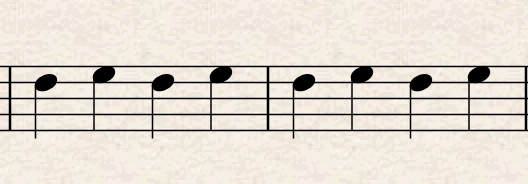
Exercise focuses on transitioning from D (bottom hand) to E (top hand).
Only two notes are used in this exercise: D → E.
0:12 – Finger Movement
Off first → On second rule applies:
Lift the E finger and low A (pinky) finger off together first.
Place the B, C, D fingers that are no longer needed back on the chanter..
Execute slowly to ensure clean movement.
0:44 – Crossing Noise Warning
Crossing noise occurs if fingers are put on first → off second.
This produces a pop sound, accidentally hitting low G or lower note.
Bad technique — avoid at all costs.
1:19 – Downward Motion
Same off first → on second technique applies when going E → D.
Lift and place fingers slowly and deliberately.
1:48 – Back and Forth Practice
Alternate D → E → D → E, focusing on:
Smooth transitions
Consistent timing
Listening for clean tone