Beginning the Journey to your First Tune
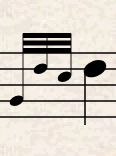
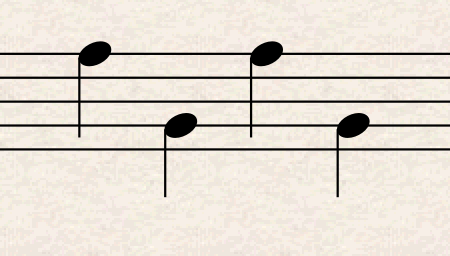
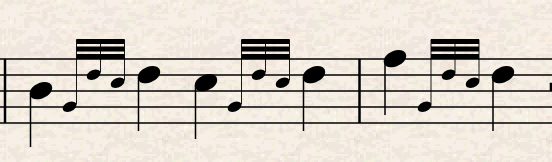
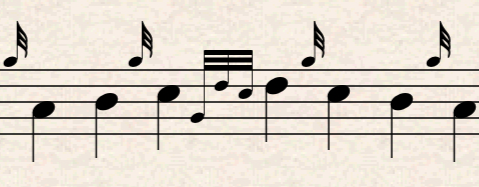
D throw is written in piping music as:
D throw written as it is played
(all notes shown clearly)
Remember the order of events
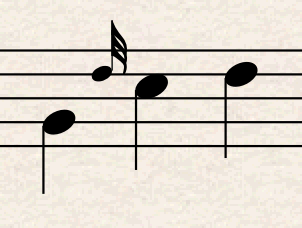
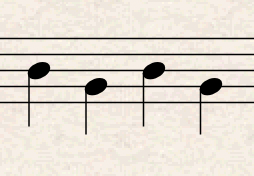
B to Low G: let pinky go on 1st. Then play: Low G to B – lift the B finger off 1st
Practice C to low G ( to start the throw on D) and listen for runs.
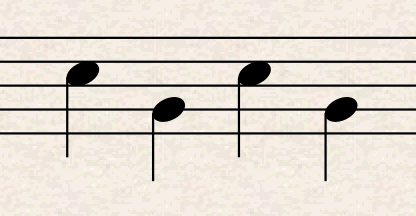
Practice F to low G ( to start the throw on D) and listen for runs.
The Order of Events is Critical
1) Play note #1
2) Lift the gracenote finger.
3) KEEPING the gracenote finger up play note #2
4) Put the gracenote back on the chanter.
Don’t memorize these: read them out loud as you take EACH step.
Checklist:
Am I in control of my fingers and not going too fast?
Am I following the “Order of Events”
Am I listening for “Runs”
Am I using the ‘off first/on second’ technique?
Is my D finger the highest when playing D?
Looking down, make sure both knuckles on your index fingers are up.
Are the fingers on both hands straight?
Is my pinky up when the E finger is up and down when the E finger is down?
Lesson 12: First Piping Movement
0:01 – 0:45 Introduction to the D Throw
Definition: The D throw is a movement that emphasizes the D note with one or more gracenotes.
Basic Sequence (Light D Throw):
Start on Low G
Play D gracenote on C
End on D
[0:41–1:11 Demonstration of low G → D Grace on C → D]
Tip: Always follow the order of events for Grace notes to avoid extra/unwanted sounds.
0:45 – 2:02 Common Mistakes with D Throw
Grace note comes down too early → extra note sounds
C finger lifted too early → unwanted notes
[1:44–2:02 Demonstrations of mistakes]
Goal Sound: Clean D Throw with no extra notes
2:02 – 3:02 Variations of the D Throw
Light D Throw: Easier, faster for music, recommended for beginners
Heavy D Throw: Adds extra emphasis, explored later
The part low G → D Grace on C → D remains constant
Only the preceding note changes depending on context (B, C, or Low A)
3:02 – 5:02 Practicing Notes Leading to D Throw
B → Low G → D Throw: Lead with pinky first, then B finger → prevents low A from sounding
Low G → B: Lift B finger first, then pinky → maintains clean tone
C → Low G → D Throw: Ensure C finger goes down last to avoid extra notes
Low A → D Throw
[3:28–5:02 Demonstrations of finger coordination for all preceding notes]
5:02 – 8:48 Combining gracenotes with D Throw
Exercise sequence: gracenote → no gracenote → gracenote → D Throw
Example: Start on Low A → move up scale to D and back down
Order of events for Gracenotes: Finger off → play note → replace finger
[8:00–8:48 Demonstration of combined exercise]