Beginning the Journey to your First Tune
Quick Practice Checklist
Ask: “Line or space?”
Apply correct mnemonic (EGBDF or FACE).
Count from Low A on chanter to find fingering.
Play the note clearly.
Practice both out loud and silently in your head.
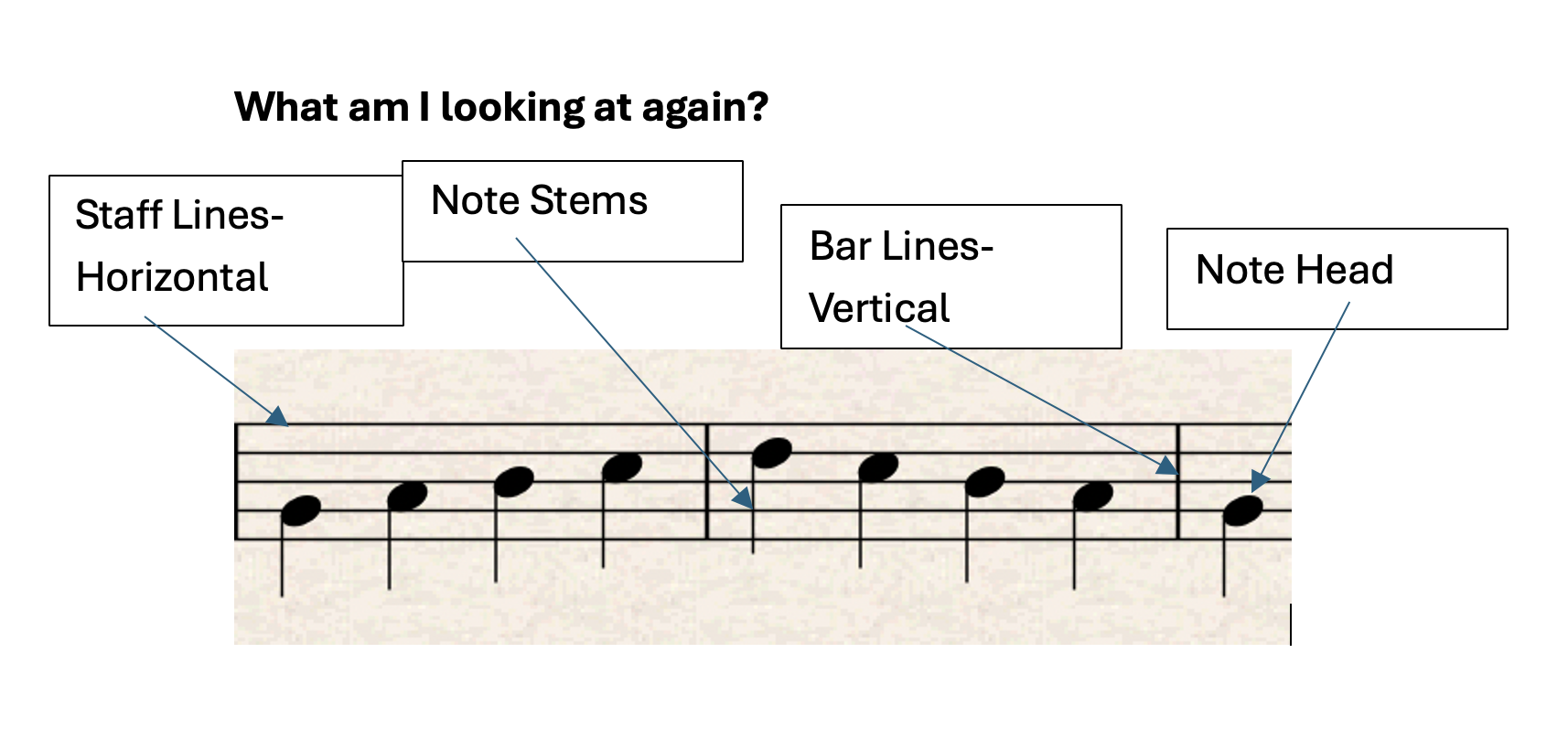
Lesson 4: How to Read the Notes on the Staff
0:01 – Introduction
Focus: understanding staff notation and how bagpipe notes are written.
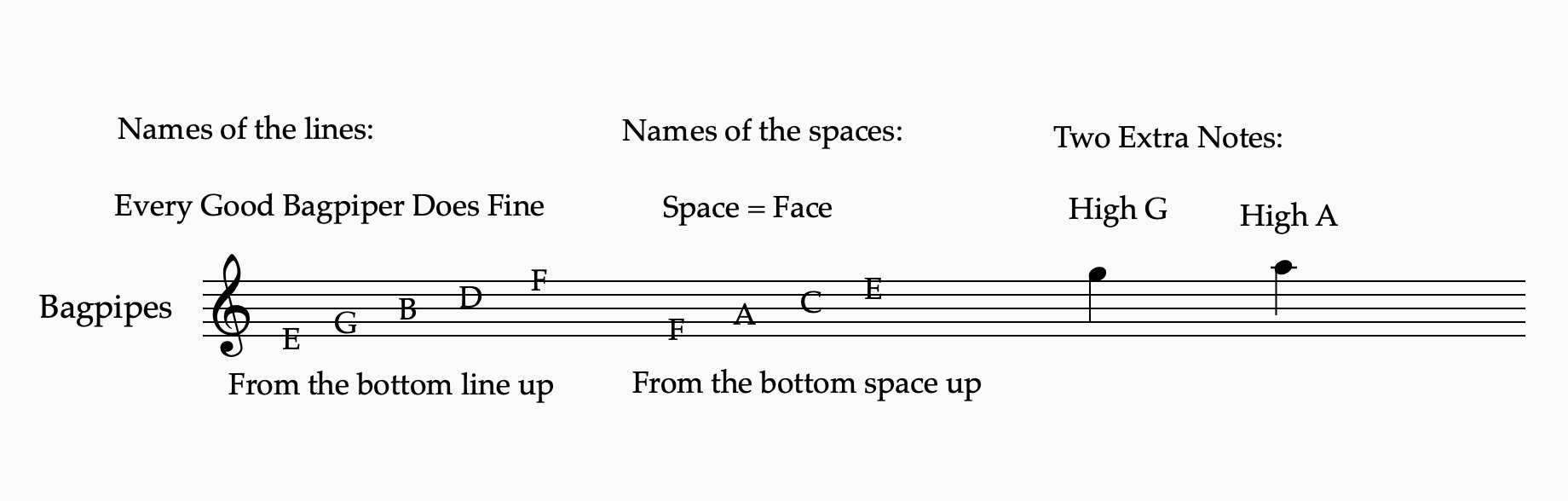
Staff = 5 lines + 4 spaces.
Treble clef (where bagpipe music is written).
0:25 – Lines of the Staff
Line names (bottom → top): E G B D F.
Mnemonic: Every Good Bagpiper Does Fine.
0:56 – Spaces of the Staff
Space names (bottom → top): F A C E.
Mnemonic: Spaces spell FACE.
1:20 – Identifying a Note (Process Example 1)
Step 1: Ask → Is it on a line or space?
Step 2: Use line/space mnemonic to find the letter name.
Step 3: On practice chanter, start at A and count up alphabetically to the note.
Step 4: Play the note.
Example: Note on a space → “FACE” → it’s C → count A-B-C → play C.
2:43 – Identifying a Note (Process Example 2)
Note placed on a line.
“Every Good Bagpiper Does Fine” → F.
On chanter: A-B-C-D-E-F → play F.
3:19 – Independent Practice Example
Pick a note → identify line/space → recall mnemonic → translate to chanter → play.
Try it silently in your head as you progress.
4:00 – Silent Practice
Goal: identify & play notes mentally first, then confirm on chanter.
Builds faster recall and fluency.
4:06 – Exceptions
Two notes do not fit into this line/space system (ledger lines, explained later).