Beginning the Journey to your First Tune
Low G and then a G gracenote on Low A
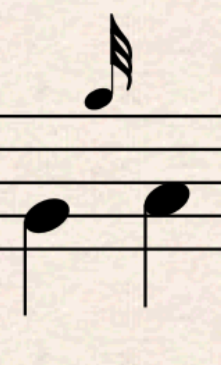
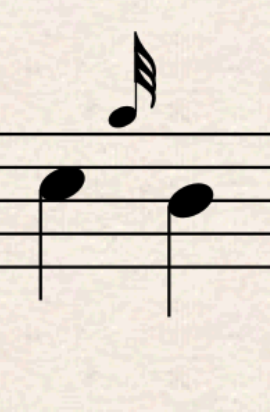
C and then a G gracenote on B
Order of Events
1) Play note #1
2) Lift the gracenote finger off of the chanter
3) Keeping the gracenote finger off, play note #2
4) Put the gracenote finger back on the chanter
Quick Practice Checklist
Apply the order of events to any gracenote on any note transition
Start slowly, then gradually increase speed.
Listen for any “extra” notes.
Key Ideas to Remember
Gracenotes on the bagpipe create dynamics and staccato effects; notes cannot increase volume by blowing harder.
Correct sequence of events is essential for clean sound:
Mastering note-to-note transitions with grace notes and simple note-to-note movements is the foundation of all bagpipe technique.
Speed comes after precision; always focus on accuracy first.
Common Mistakes to Avoid
Skipping steps in gracenote order – causes extra notes or messy sound.
Playing the gracenote on the second note instead of the first
Playing the gracenote on the first note before moving to the second note.
Rushing (too fast too soon) – prevents clean articulation; speed must come after accuracy.
Lesson 10: Gracenotes-One Note to Another
0:01 – 1:00 Using Gracenotes to Create Dynamics
Unlike other instruments, bagpipes cannot change volume by blowing harder.
Gracenotes emphasize certain melody notes to create dynamics (louder or softer effect).
Example: Adding a gracenote on every other note of the scale makes those notes stand out.
[0:42–1:00] demonstrates “no gracenote / gracenote” pattern.
1:01 – 2:00 Gracenotes Between Notes
Two main movements in piping music:
Moving from one note to another (already covered).
Moving from one note to another with a gracenote (focus of this lesson).
Example: Low G → Low A with a G gracenote
Step 1: Play note 1 (low G).
Step 2: Lift the gracenote finger (G).
Step 3: Play note 2 (low A) while keeping gracenote finger off.
Step 4: Replace the gracenote finger on the chanter.
[1:48–3:04] Demonstration of this step-by-step sequence
3:05 – 4:00 Importance of Correct Order
Correct order = clean and precise sound.
Sequence: Play note → lift gracenote finger → play next note → replace gracenote finger.
Incorrect order produces extra sounds:
1 3 2 4 → extra note.
Playing grace note after moving to next note → not clean.
[4:01–5:22] Demonstrates wrong vs correct order
4:05 – 5:34 Key Points
The order of events is universal for any gracenote between two notes.
Playing slowly ensures accuracy; speed comes naturally with practice.
Mastering:
Note-to-note transitions
Gracenote placement
Once mastered, you can play cleanly in any scenario.